
12 Best Low Calorie Gluten Free Bread Recipes
Introduction
Finding low calorie gluten free bread that actually tastes good is harder than most people admit. Many store-bought options are dry, crumbly, or packed with fillers that defeat the purpose of eating healthier. This list cuts through the noise and focuses only on breads that deliver real flavor, clean ingredients, and sensible calories. Whether you prefer soft, rustic, nutty, or airy textures, each recipe offers something different without loading your diet with unnecessary carbs or fats.
These breads support simple, everyday meals—toast, sandwiches, snacks—without making you feel restricted. You get options built on almond flour, oat flour, millet, buckwheat, quinoa, and even seed blends. Every recipe here helps you stay consistent with gluten-free eating while keeping calories under control, making the process far easier than most people expect.
1. Almond Flour Low-Calorie Gluten-Free Bread
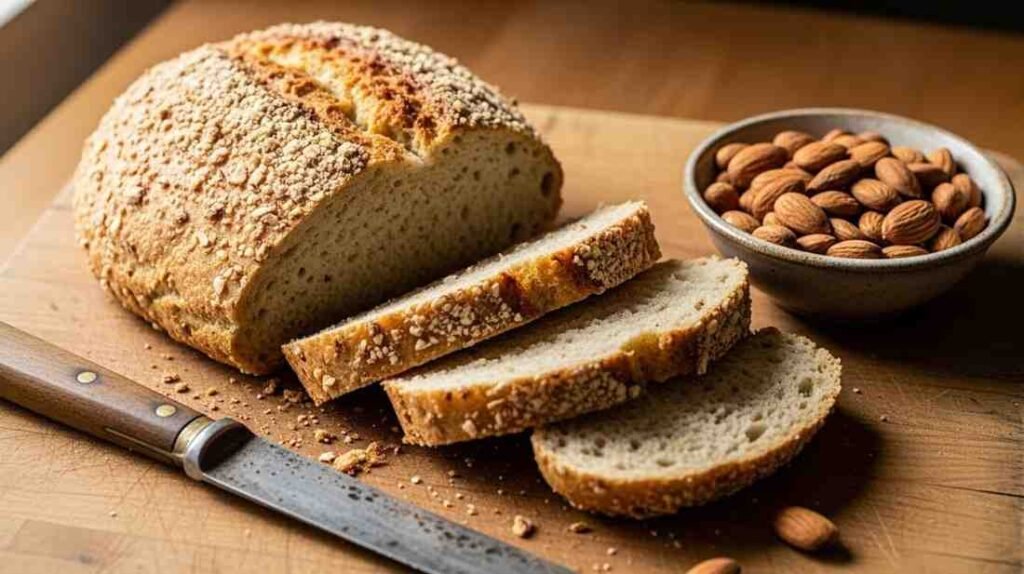
A close-up of a sliced almond flour loaf on a wooden cutting board. The bread has a soft beige crumb and a thin golden crust, with almonds scattered around it for a natural, rustic feel. Soft daylight highlights the texture, making the loaf appear healthy, light, and perfect for clean eating or meal prep.
This almond flour low calorie gluten free bread works for anyone who wants a lighter, nutrient-focused option without sacrificing flavor. Almond flour keeps the loaf dense but tender, and it naturally adds healthy fats that help with satiety. The texture is ideal for slicing, toasting, and pairing with toppings like avocado or sugar-free jam. It fits well into low-calorie diets while still tasting rich.
The bread is also extremely versatile. You can use it for sandwiches, toast, or even as a base for open-faced meals. Since almond flour is gluten-free, it reduces stomach discomfort for those sensitive to wheat. It also avoids empty calories found in traditional bread. When stored well, it stays moist for days, making it a reliable meal-prep staple.
2. Oat Flour Low-Calorie Gluten-Free Sandwich Bread
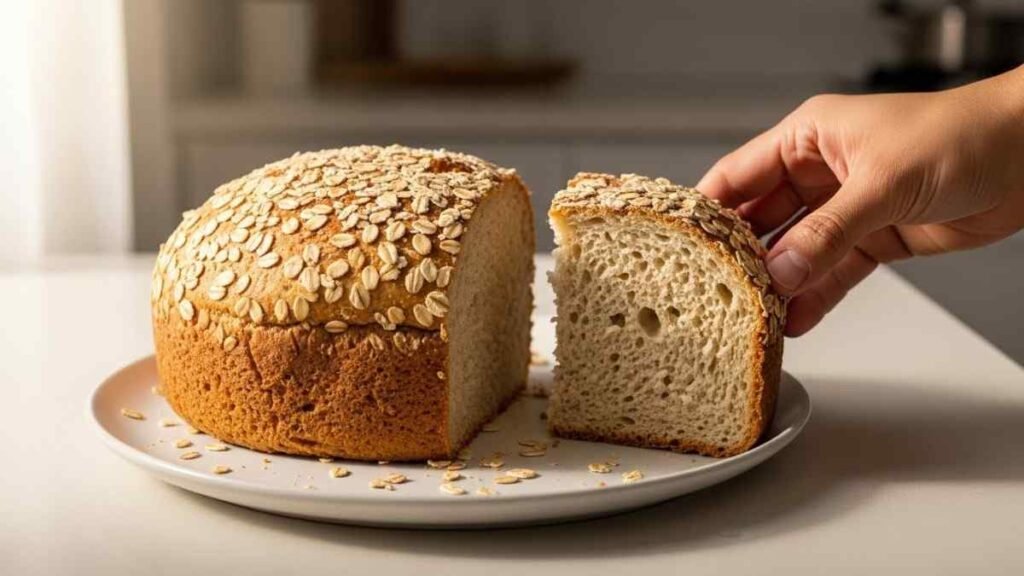
A medium-sized loaf made from oat flour sits on a clean white plate with two slices facing forward, revealing a fluffy and airy crumb. The color is lightly golden, and a few oats are sprinkled on top for decoration. The background shows a minimal kitchen scene, making the bread look approachable, simple, and ideal for everyday meals.
This oat flour low calorie gluten free bread offers a softer bite compared to nut-based breads. The mild flavor makes it perfect for sandwiches without overpowering fillings. It’s also naturally higher in fiber, helping keep you full longer while keeping calories under control. The simplicity of oat flour makes this bread an easy option for beginners.
Its texture makes it excellent for toast, grilled sandwiches, or breakfast recipes. It doesn’t crumble like many gluten-free loaves, which makes it great for meal prep or packed lunches. The bread also absorbs flavors well without getting soggy. Anyone wanting a healthy, stable, and low-calorie staple will find this recipe reliable for a weekly rotation.
3. Coconut Flour Low-Calorie Gluten-Free Bread
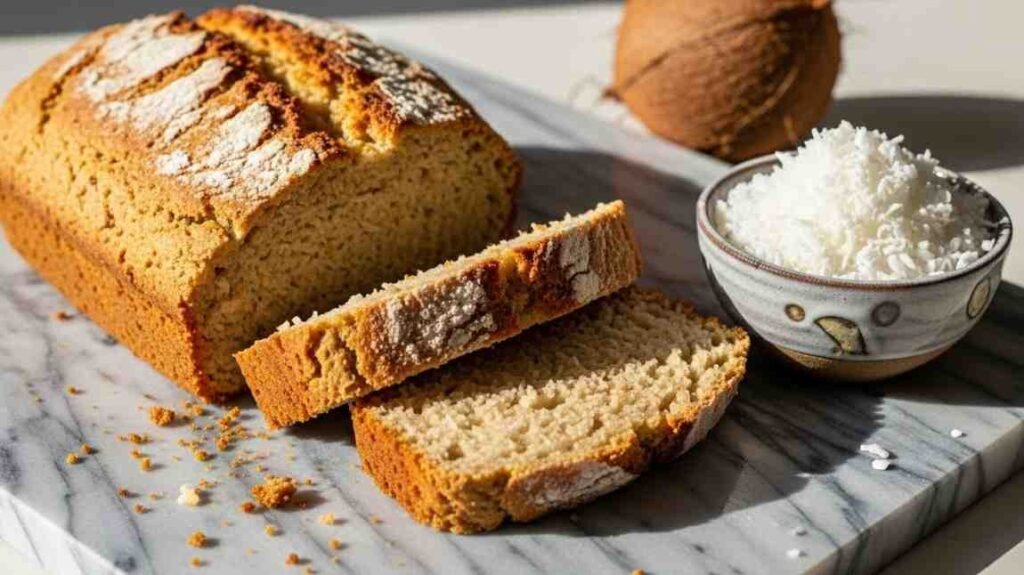
A rectangular loaf of coconut flour bread sits on a marble slab, sliced neatly with a few crumbs scattered around. The interior is pale and slightly spongy, with a mild golden crust. A small bowl of shredded coconut sits beside the loaf to emphasize its ingredients. The scene looks clean, bright, and wholesome.
Coconut flour creates one of the lowest-calorie gluten-free bread options because it absorbs a lot of moisture and expands, providing more volume with fewer calories. This loaf has a mild sweetness and a soft, cake-like texture that makes it perfect for breakfasts or light snacks. It’s naturally low-carb and works well for people trying to reduce wheat intake without feeling restricted.
This bread also pairs beautifully with both sweet and savory toppings. It toasts nicely, creating a crisp edge while keeping a soft inside. Because coconut flour is high in fiber, you stay fuller for longer without adding unnecessary calories. Its lightness makes it ideal for anyone tracking calories or looking for a gluten-free bread that doesn’t weigh them down.
4. Buckwheat Low-Calorie Gluten-Free Rustic Bread
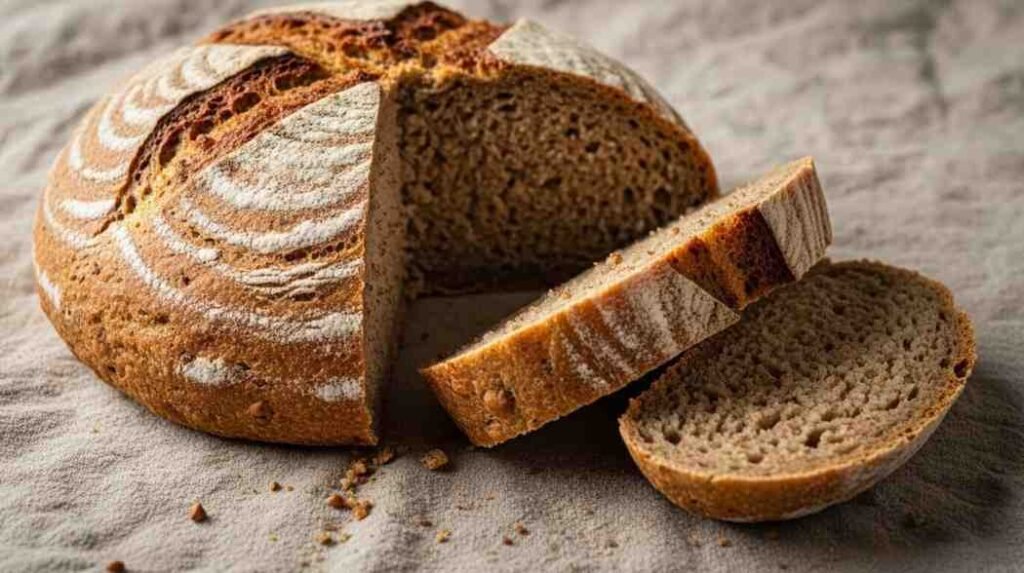
A rustic-looking buckwheat loaf rests on a linen cloth, with cracked edges and a darker, earthy tone. Several slices lean against the loaf, showing a dense but even crumb. A few buckwheat groats are scattered casually around the bread. The overall look is hearty, simple, and naturally healthy.
Buckwheat gives this low calorie gluten free bread a rich, earthy taste while keeping calories lower than many traditional grains. The dense crumb makes it satisfying, so you don’t need oversized slices to feel full. Buckwheat is nutrient-dense, offering protein, fiber, and minerals that support energy and digestion. This bread works well for anyone who wants a more grounded, wholesome flavor.
It’s especially good alongside soups, salads, and savory spreads. Because buckwheat holds moisture well, the loaf stays fresh longer than many gluten-free breads that dry out quickly. It’s also great for people looking for a wheat alternative that doesn’t feel bland or boring. The hearty texture provides comfort while keeping your calorie intake in check.
Love cheese but hate the calorie damage? Zero-calorie cheese lets you enjoy flavor without the guilt.
5. Quinoa Flour Low-Calorie Gluten-Free Bread
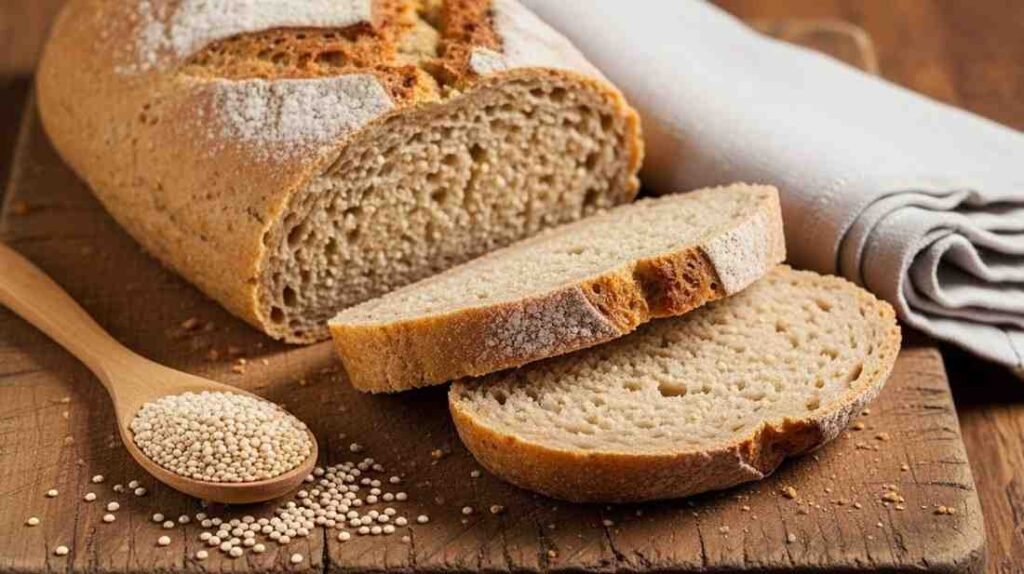
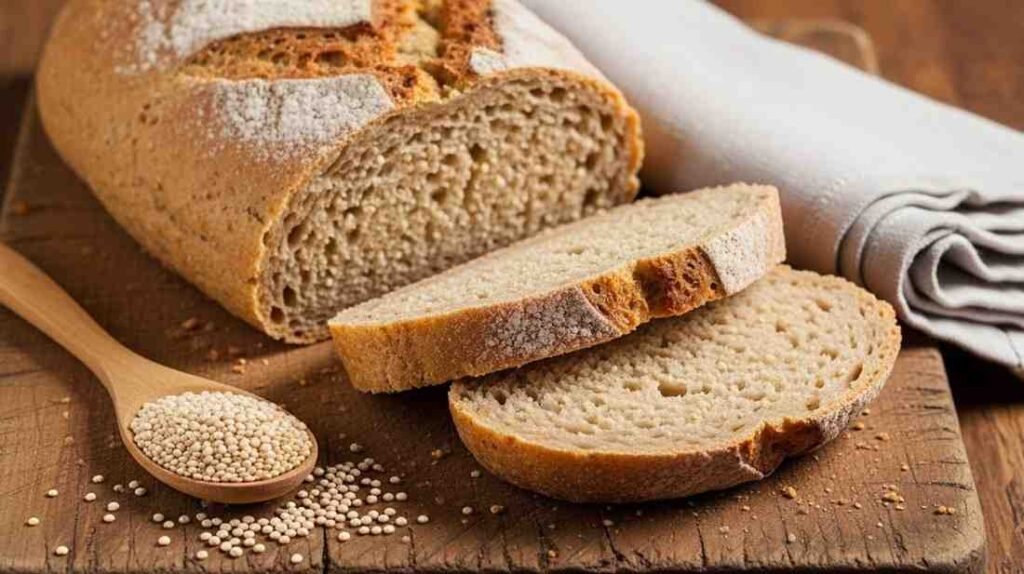
A quinoa flour loaf sits on a wooden board with a clean slice placed forward, revealing a smooth, slightly tan interior. A spoonful of raw quinoa rests beside the loaf, adding a natural touch. Soft window light highlights the grainy texture, making the bread look balanced, nutritious, and ideal for healthy living.
Quinoa flour brings a mild, nutty flavor to this low calorie gluten free bread while keeping it light enough for everyday meals. Because quinoa is naturally high in protein, the bread becomes more filling without relying on heavy ingredients. Its structure is sturdier than rice-flour breads but softer than dense nut-based loaves, giving it a satisfying middle-ground texture that many people prefer.
The bread also works well for toast, sandwiches, and nutrient-focused snacks. Its protein and fiber combination helps stabilize hunger, which makes it a smart choice for low-calorie meal planning. The neutral taste pairs easily with spreads, vegetables, or lean proteins. It’s a dependable staple for anyone seeking a healthier gluten-free bread that supports both flavor and calorie control.
6. Rice Flour Low-Calorie Gluten-Free White Bread
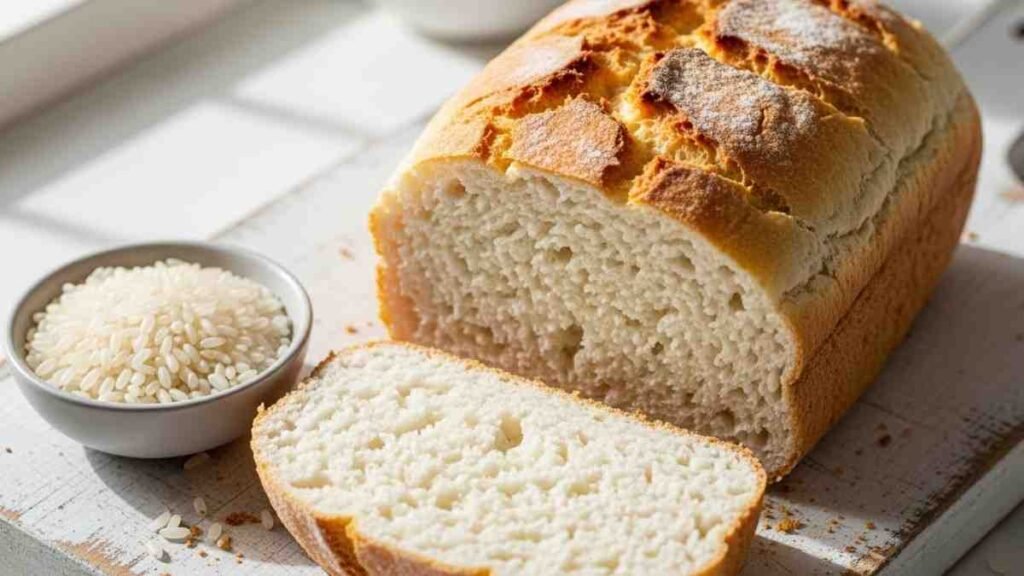
A soft, fluffy rice flour loaf is displayed on a simple white cutting board, with several slices arranged in a fan shape. The crumb looks bright white and airy, and the crust is thin and pale. A small dish of rice grains sits nearby. The setup feels clean, fresh, and reminiscent of classic white bread—but healthier.
This rice flour version of low calorie gluten free bread is perfect for people who miss the light, classic texture of traditional white bread. Its mild flavor works with almost any topping, from peanut butter to savory spreads. The slices are soft enough for sandwiches yet stable enough to toast. It’s one of the easiest gluten-free breads to enjoy daily because it doesn’t feel heavy.
It’s also an excellent beginner-friendly recipe since rice flour behaves predictably and doesn’t dominate the flavor. The bread stays moist longer than many gluten-free loaves, which makes it convenient for meal prep. Because it’s naturally low in fat and calories, it fits well into weight-conscious eating while still giving the comfort of familiar white bread texture.
7. Chia Seed Low-Calorie Gluten-Free Fiber Bread
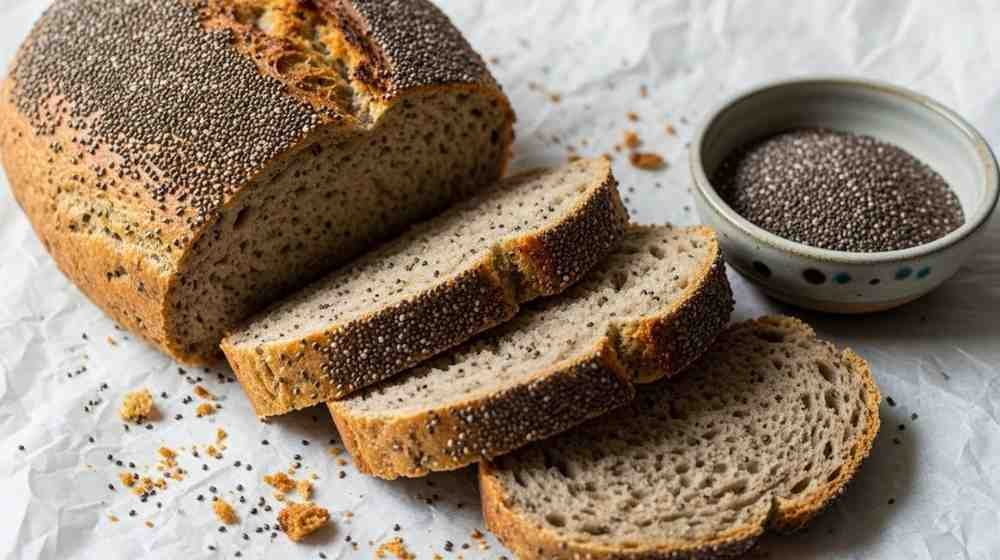
A rectangular loaf rests on parchment paper, with slices showing small black chia seeds evenly distributed throughout the crumb. The crust is a gentle golden brown, and a small bowl of dry chia seeds sits beside the loaf. Soft overhead lighting makes the bread look hearty, textured, and rich in natural fiber.
Chia seeds add bulk and moisture to this low calorie gluten free bread without increasing calories significantly. The seeds absorb water and create a gel-like texture that keeps the loaf soft and structured. This results in a bread that is filling, nutrient-dense, and beneficial for digestion. The mild flavor lets the texture stand out without overwhelming your meals.
This bread is particularly good for people who need longer-lasting fullness while still maintaining a calorie deficit. It pairs well with spreads, eggs, and veggie toppings. It also toasts nicely, forming a crisp exterior while retaining moisture inside. With its strong fiber content, it supports healthy eating routines and makes sticking to a low-calorie diet easier and more enjoyable.
8. Flaxseed Low-Calorie Gluten-Free Omega Bread
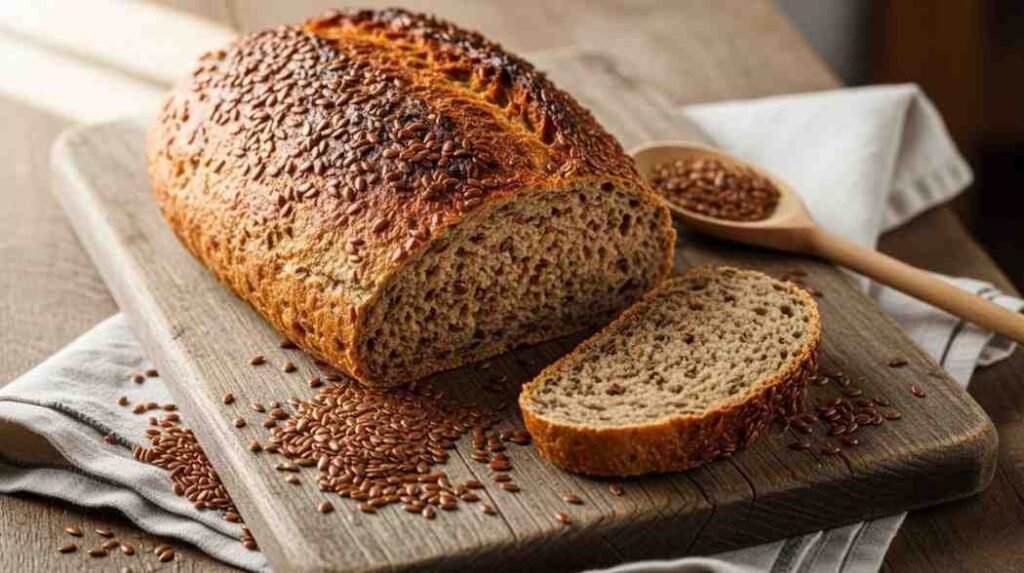
A loaf of flaxseed bread sits on a cutting board with visible brown flax specks throughout the crumb. A small bowl of whole flaxseeds and a wooden spoon enhance the natural, earthy look. The crust is slightly darker, giving a wholesome, nutrient-rich appearance that fits clean eating photography.
Flaxseed brings a rich, nutty flavor to this low calorie gluten free bread while boosting omega-3 intake. The bread has a hearty bite but remains soft enough for everyday sandwiches. Its combination of protein, fiber, and healthy fats helps keep hunger controlled without adding unnecessary calories. It works well for anyone who wants a functional bread that supports overall nutrition.
The texture makes it ideal for breakfast toast, pairing especially well with avocado or light spreads. Flaxseed also improves the bread’s stability, preventing the crumbly issues common in gluten-free baking. Because it offers natural nutrients without calorie overload, this loaf is a smart choice for people focused on both taste and health goals.
9. Sorghum Flour Low-Calorie Gluten-Free Artisan Bread
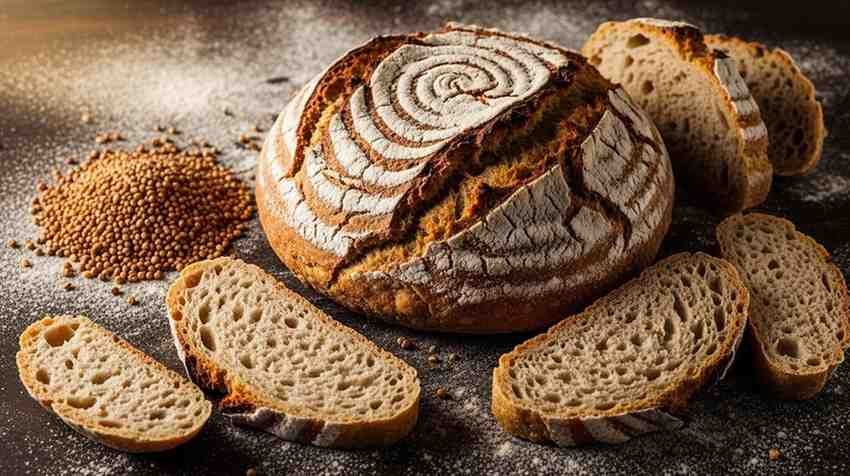
A round artisan-style sorghum loaf sits on a flour-dusted board, with a few rustic cracks on top and a lightly browned crust. Several slices are angled forward, showing an even, soft crumb. A small pile of sorghum grains and a cloth napkin add an earthy, homemade feel to the scene.
This sorghum flour version of low calorie gluten free bread offers a pleasantly mild and slightly sweet flavor. The texture resembles traditional artisan bread, making it a great substitute for people who miss bakery-style loaves but want fewer calories. Sorghum flour provides a balanced density without making the bread feel heavy, making it ideal for daily eating.
This bread is especially useful for sandwiches, dipping, or serving with soups. It retains moisture well and doesn’t crumble as easily as many gluten-free options. Because sorghum is naturally rich in nutrients and fiber, it supports healthier eating habits without adding excess calories. It’s a solid fit for anyone wanting a wholesome, lower-calorie bread that still feels satisfying and substantial.
Fuel your body the smart way — healthy protein meals help you stay full, energized, and consistent.
10. Millet Flour Low-Calorie Gluten-Free Soft Bread
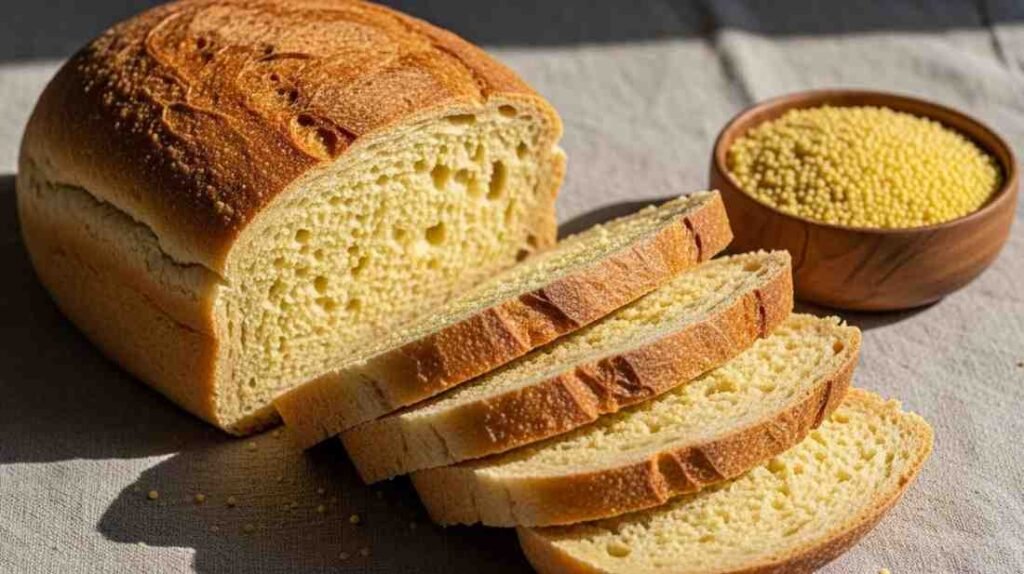
A warm-toned loaf made with millet flour sits on a neutral cloth, with a few slices placed neatly beside it. The interior is soft and pale yellow, and the crust is thin and smooth. A small wooden bowl of millet grains creates a natural, minimalistic composition that highlights simplicity and nourishment.
Millet flour creates a naturally soft and tender low calorie gluten free bread. The mild flavor doesn’t overpower toppings, making it a versatile choice for breakfast or lunch. Its softness makes it especially appealing to anyone who dislikes the dense texture of many gluten-free breads. Millet also offers beneficial minerals that support overall wellness while keeping calories low.
This bread holds together well for sandwiches and toasts without becoming gummy or dry. It absorbs spreads evenly, making it ideal for healthy snacks or light meals. Because millet flour is easy to digest, it’s a smart choice for people who want a gentle, everyday gluten-free bread that supports a balanced, calorie-conscious lifestyle.
11. Tapioca-Based Low-Calorie Gluten-Free Light Bread
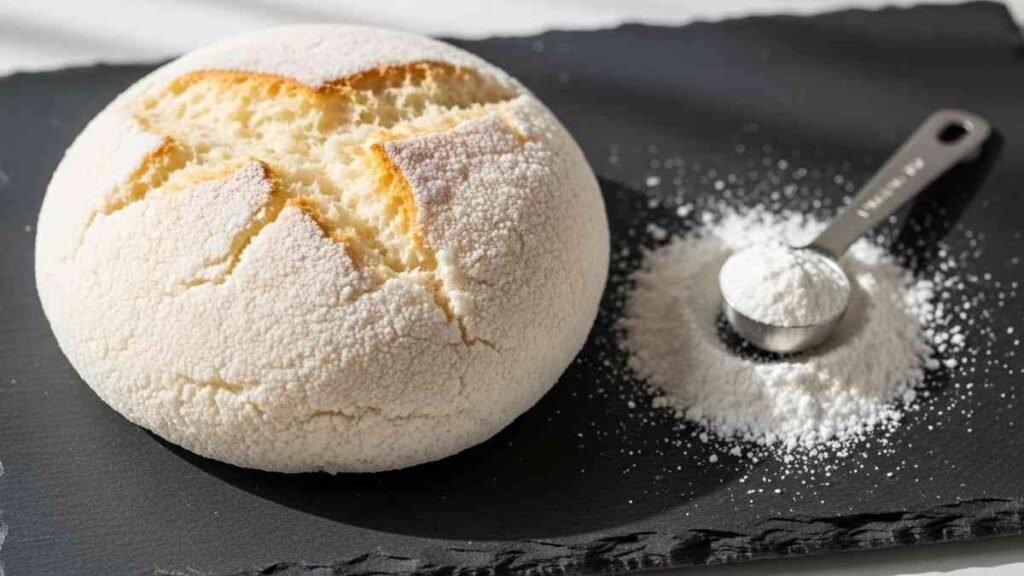
A light, airy loaf sits on a sleek cutting board, with a few slices showing an almost spongy, elastic crumb. The crust is pale and slightly glossy. A small cup of tapioca starch is placed nearby, adding context. Bright lighting enhances the loaf’s airy, lightweight character, making it appear extremely soft.
Tapioca starch gives this low calorie gluten free bread a unique, chewy softness that stands out from grain-based loaves. It’s one of the best options for people who want a very light bread without calorie-heavy flour alternatives. Because tapioca creates a natural elasticity, the texture feels closer to traditional bread, making it enjoyable without compromise.
This bread is great for quick snacks, spreads, and light meals. It doesn’t offer strong flavor, which means it works well with both sweet and savory toppings. The ultra-light crumb makes it ideal for those counting calories, as even a small slice feels satisfying. It’s a practical addition to any gluten-free, low-calorie diet where texture and comfort still matter.
12. Mixed-Grain Low-Calorie Gluten-Free Multiseed Bread
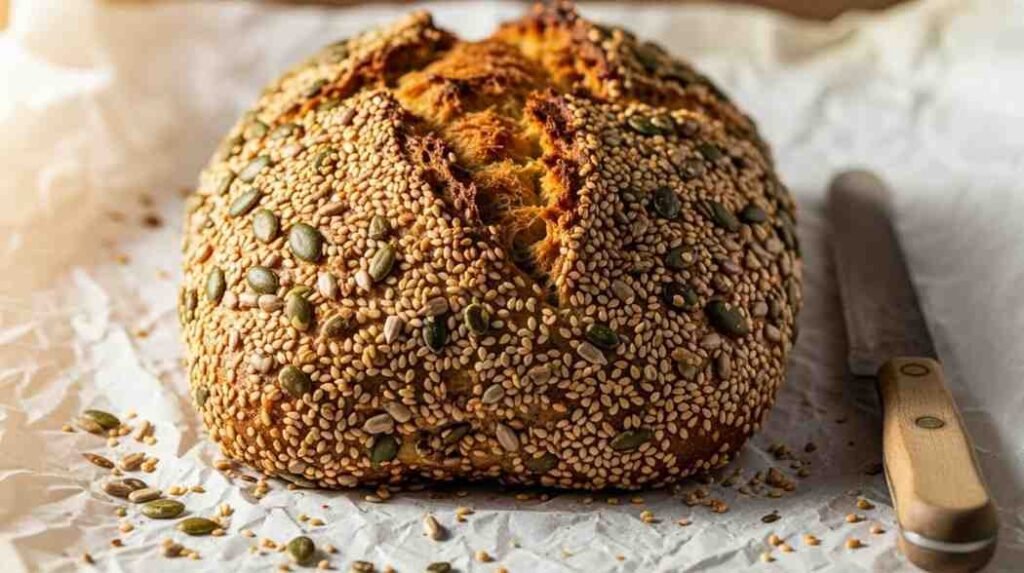
A seeded loaf covered with sunflower seeds, pumpkin seeds, and sesame rests on parchment paper. Several slices reveal a hearty crumb filled with visible seeds and grains. The lighting highlights texture and crunch, creating a nutritious, inviting aesthetic perfect for health-focused eating.
This mixed-grain loaf is one of the most balanced versions of low calorie gluten free bread because it blends multiple gluten-free flours for better texture and flavor. The seeds enhance crunch without adding excessive calories, making the bread filling but still diet-friendly. Its hearty structure makes it suitable for more substantial meals.
The combination of grains provides a wide nutrient profile, helping support energy, digestion, and stable hunger. The bread is excellent for toast, open-faced meals, or pairing with lean proteins. Despite its hearty appearance, it remains calorie-conscious and works well for anyone who wants a flavorful, satisfying bread without compromising their calorie goals.
Conclusion
Low calorie gluten free bread doesn’t have to be bland, dense, or complicated. When you pick the right flour base and pair it with smart, minimal ingredients, the result is bread that supports your health goals without sacrificing taste or texture. The recipes in this guide give you options for every preference—soft, hearty, light, fiber-rich, or seed-packed—so you’re never stuck with boring slices again.
Use these breads for meal prep, daily breakfasts, or clean-eating snacks. They’re easy to customize, easy to store, and surprisingly satisfying for anyone watching calories. The key is consistency: choose the breads you enjoy, rotate them as needed, and make your gluten-free lifestyle simple instead of stressful. If you want the full article combined in one piece, just say the word.